

Understanding Fiber on Food Labels
Key Takeaways:
All fiber listed on a nutrition label must demonstrate beneficial physiological effects.
Something marked high fiber may not always be nutritionally valuable overall.
Individual responses to dietary fiber can vary significantly and slow introduction is advised.
Fiber needs water to function properly, so adequate hydration is important.
Identifying isolated or synthetic fiber in packaged food enables increased opportunity for meeting daily fiber requirements.
Digestive and nutritional challenges around menopause can make it difficult for some women to meet their recommended daily fiber needs. Women who may not be able to tolerate a wide variety of whole foods may be able to find more options to increase their dietary fiber through carefully chosen packaged foods.
As research continues to highlight the role of different fibers in cardiovascular health, digestion, cholesterol balance, blood sugar regulation, hormone balance, and mental health, food manufacturers increasingly petition the FDA to expand which ingredients qualify as fiber on Nutrition Facts labels.
FDA Definition of Fiber
In 2016, the FDA formally defined dietary fiber into two categories:
Naturally occurring fibers that are intrinsic and intact in plants.
Isolated or synthetic non-digestible carbohydrates that have been shown to provide beneficial physiological effects in humans.
The first category is relatively straightforward. Naturally occurring fibers are found in whole plant foods that are typically abundant in minerals, vitamins, antioxidants, and phytonutrients.
Beneficial Effects
The second category often found in packaged foods is more complex. Isolated or synthetic fibers may be extracted from plants or manufactured through processing. In order to qualify, they must demonstrate at least one of the following beneficial physiological effects:
Lowers blood glucose levels
Lowers cholesterol levels
Helps support healthy blood pressure
Increases frequency of bowel movements
Increases mineral absorption in the intestinal tract
Promotes fullness and reduced calorie intake through satiety
Approved Isolated/Synthetic Fiber
Since formally defining fiber, the FDA has approved the following isolated or synthetic non digestible carbohydrates as dietary fiber and allows their use on food labels:
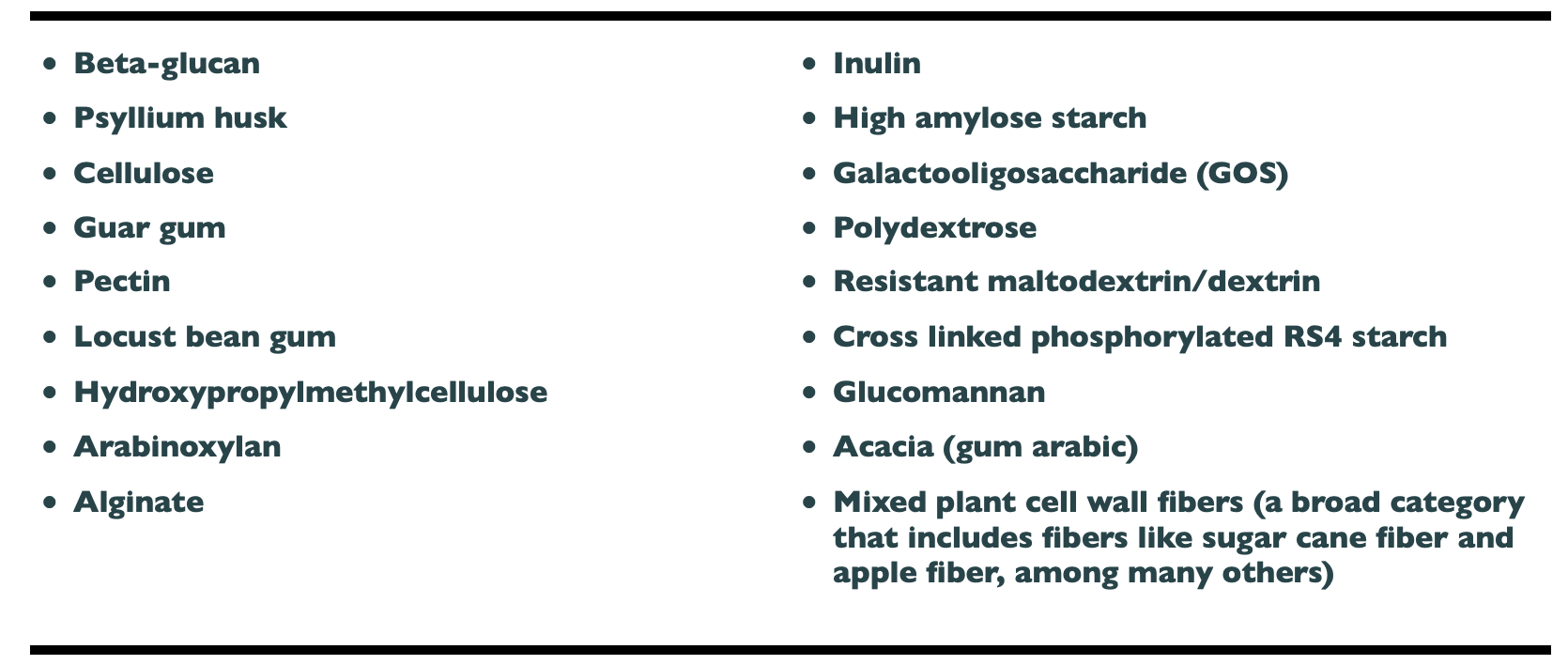
Food labels don’t clearly differentiate between naturally derived isolated fibers and more heavily processed synthetic ones. This can create confusion for consumers trying to choose beneficial packaged products.
Not all fibers function in the same way. Some may support regularity, while others feed beneficial gut bacteria. What works well for one woman may cause bloating and gas in another.
A diet of fiber rich whole foods offers beneficial nutrients and plant compounds that work synergistically to support digestion, cardiovascular health, immune function and microbiome diversity, benefits that are rarely available in packaged foods. This may be challenging for some.
If you have IBS or other sensitivities, packaged food options can help you manage your fiber intake. Search for fortified snack bars with more easily digestible ingredients like Go Macro Bars, canned vegetables like pumpkin, sweet potatoes, green beans or carrots. Likewise, applesauce, lactose free yogurts and buckwheat cereals are some examples of packaged foods that may be gentler on your digestive system while still offering positive benefits. You might also find a teaspoon of psyllium husk in water manageable. Go slowly and introduce new foods one at a time.
Fiber Needs Water
Regardless of what fiber sources you choose, fiber should be introduced gradually into your diet. In addition, make sure you are hydrated. Fiber needs water to function properly. Staying hydrated may help reduce constipation and digestive discomfort that can occur when fiber intake increases too quickly.
A High Fiber Product is Not Always Best
When purchasing packaged foods, choose products with ingredient lists you can easily recognize and understand. This will help you make more informed choices when trying to increase fiber in a way that supports your individual needs. Be aware that a package labeled high fiber doesn’t necessarily mean that what’s inside is overall nutritionally valuable. It may still contain added sugars, excess sodium, industrial oils and other ingredients that may not benefit long term health goals. So choose wisely.
Fiber offers long term benefits that you should use to your advantage. Taking time to identify the types that work best for your body and making them part of your daily diet can help support healthy aging for years to come.