
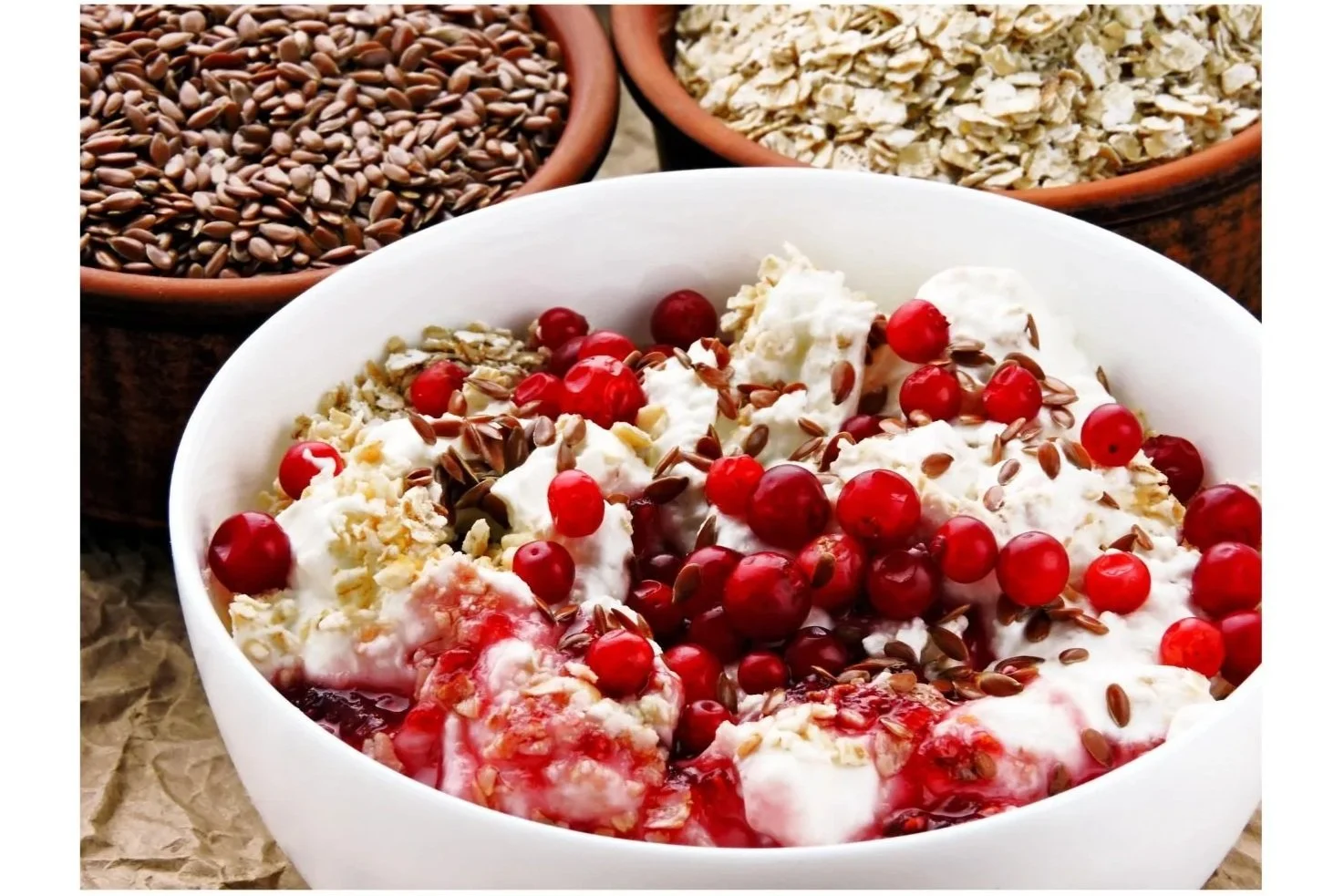
Fiber-Rich Carbohydrates: Why You Need Them Around Menopause
It’s time to shake off your carb phobia and recognize their full value. Your older self will thank you. If you’re approaching menopause, or you’re already postmenopausal, you need carbs. You certainly don’t need all of them, and you’re right to refrain if your idea of carbs is potato chips, high-sugar cereals and cookies. It’s the fiber-rich carbohydrates that you want to invite to the table every day and for good reason.
Not All Carbs Are Equal
Do you need to lower cholesterol that recently spiked as you reached menopause? Do you have to stabilize your blood sugar? Constipated? Do you want to protect your bones? Interested in improving your microbiome? Or do you simply want to feel better as you move through menopause?
Eliminating carbs is not your answer. You may have to undo years of a misguided belief that carbohydrates are the enemy.
Fiber-rich complex carbohydrates may offer you the nutrients and energy you need to maintain an active and independent lifestyle. I’m talking about fruits, vegetables, legumes, whole grains, nuts and seeds. These fiber-rich foods are what your body wants around menopause, as the need to protect your muscles, bones and heart becomes more important.
This isn’t the time for extreme dieting or skimping on food. Honestly, there’s no good time in your life for that.
Carbs are an important source of energy, your body’s preferred source of energy. When it doesn’t have what it needs, it gets resourceful and adapts. Brilliant, right? But your body wasn’t designed for constant restriction. It was designed like any other machine, to run steadily, evenly and consistently.
Positive Impacts
Of course like everything, this is one part of the well being equation. There’s no denying that it’s a very important one, especially when you start to look at its positive impacts.
A 2021 cross-sectional study showed a reduction of depression in women with increased dietary fiber intake. Another recent study found considerable reduction in anxiety and stress with high quality fiber carbs among older adults. Although these are limited studies and much more research is needed, these are very notable findings.
Fiber-rich foods like flaxseed contain lignans that your gut bacteria convert into phytoestrogens, estrogen-like compounds in plants. These may influence estrogen activity and metabolism because they interact, albeit weakly, with estrogen receptors. Research into whether that translates into fewer hot flashes and other menopausal symptoms is promising, but still shows mixed results.
The short-chain fatty acids produced from fiber fermentation in the gut may play a possible role in bone metabolism, how quickly bone breaks down and builds back up. Unfortunately, like many topics, more research on women is needed to fully understand the extent to which this impacts preservation of bone density.
It’s important to understand that fiber has many forms. Different types of fiber cause different reactions in your digestive system. Whether it’s soluble or insoluble, it may have fermentable or viscous properties that affect each body differently. The foods that work brilliantly for your friend might not work for you. That’s why variety is important and experimentation is often needed to find what works best.
Why Fiber-Rich?
1. Blood Sugar Control. Soluble fiber slows down glucose absorption resulting in better management of blood sugar swings. Sources include: oats, green bananas and beans.
2. Reduces LDL Cholesterol. Research shows clear evidence that certain soluble fibers increase the elimination of bile acids that affect how the body handles cholesterol. Sources include: oats, berries, ground flaxseed and chia seed.
3. Mineral Absorption. When fibers are fermented in the gut they may improve absorption of minerals like calcium, although it is very dependent on the type of fiber and the individual. Fermentable prebiotic fiber sources include: sunchokes, onions and garlic. Some people with IBS may need to be cautious here, as I explain below.
4. Estrogen Metabolism. Fiber intake can influence how much estrogen is reabsorbed or eliminated through digestion which can have possible benefits for menopausal women. Sources include: ground flaxseed, wheat bran.
5. Regulation of Bowel Movements. Certain fibers promote regular bowel movements and support the health of your colon. Sources include: kiwi, prunes and oats.
6. Anti-Inflammatory Benefits. Clinical research shows reductions with high fiber intake of some inflammatory markers associated with chronic low grade inflammation like CRP (C-reactive Protein). Further studies are still needed. Sources to include in an anti-inflammatory diet: green bananas, chicory, bran and sweet potatoes.
7. Appetite Control. Certain fibers like viscous soluble fibers can help you feel satiated for longer periods. Sources include: oats, ground flaxseed and apples.
8. Improved Gut Microbiome. Fermentable fibers provide food for gut bacteria which can produce short- chain fatty acids, as discussed earlier. This may have beneficial effects on your overall health. Sources include: oats, barley, onions and garlic.
Hydrate
There is a caveat. None of this works without hydration. You need to stay well hydrated when you are nourishing your body with fiber rich foods. Your digestive system needs hydration for everything to work smoothly from north to south. This is especially relevant with fibers such as chia seeds which hold water and increase bulk in your stools.
As you introduce more complex carbs into your daily diet, do it very slowly. Changing your diet too quickly will most likely leave you feeling gassy, bloated and uncomfortable. Remember that different types of fiber affect every woman differently. Experiment and try different foods. The recommended daily amount of fiber ranges from 21 to 25 grams. These are highly debated numbers. Many consider these amounts to be too low for older women.
Don’t stress about counting numbers and weighing amounts. If you just start with smaller quantities and introduce one new fibrous food at a time, you will eventually get where you need to be. Trust your body.
Notable Exceptions
Beyond moving too fast or not being hydrated, there are situations where certain high fiber foods may not agree with you.
If you suffer from IBS (irritable bowel syndrome) you will have to carefully navigate your way around these foods, particularly with FODMAPs, (fermentable oligosaccharides, disaccharides, monosaccharides and polyols). For some people, certain FODMAPs can cause bloating, gas, bowel changes and abdominal pain. While navigating your way through whole foods, you may wish to explore some packaged food sources for fiber that may be gentler on your digestive system.
Although fiber is often helpful to maintain regular bowel movements, adding fiber isn’t always the solution to constipation. Sometimes there may be causes other than lack of fiber contributing to the problem. These might range from side effects of certain medications to pelvic floor dysfunction. You should talk with your doctor to address consistent irregularity when fiber isn’t helping.
Small Steps
This all may sound incredibly complex and that’s understandable because unfortunately, it can be complex. You may want to work with a nutrition professional to help you narrow down what might be best for you. No matter how you proceed, give your body the time it needs to adjust to change.
You probably spend time on unnecessary things every week, now it’s time to spend some time on yourself. You are definitely worth it.
You don’t stay independent as you age by doing nothing. Change is good, one step at a time.